Mastering Erosion Control for Sloped Yards
Managing a sloped landscape presents unique challenges for homeowners and commercial property managers alike. Without proper intervention, gravity and rainfall can lead to topsoil loss, nutrient depletion, and unsightly rills that compromise the structural integrity of your yard. Effectively managing these inclines requires a dual approach: mechanical stabilization through high-quality matting and biological reinforcement via strategic plant selection. By implementing professional-grade solutions, you can transform a vulnerable hillside into a stable, lush, and sustainable landscape.
Utilizing Professional
Erosion Control Matting
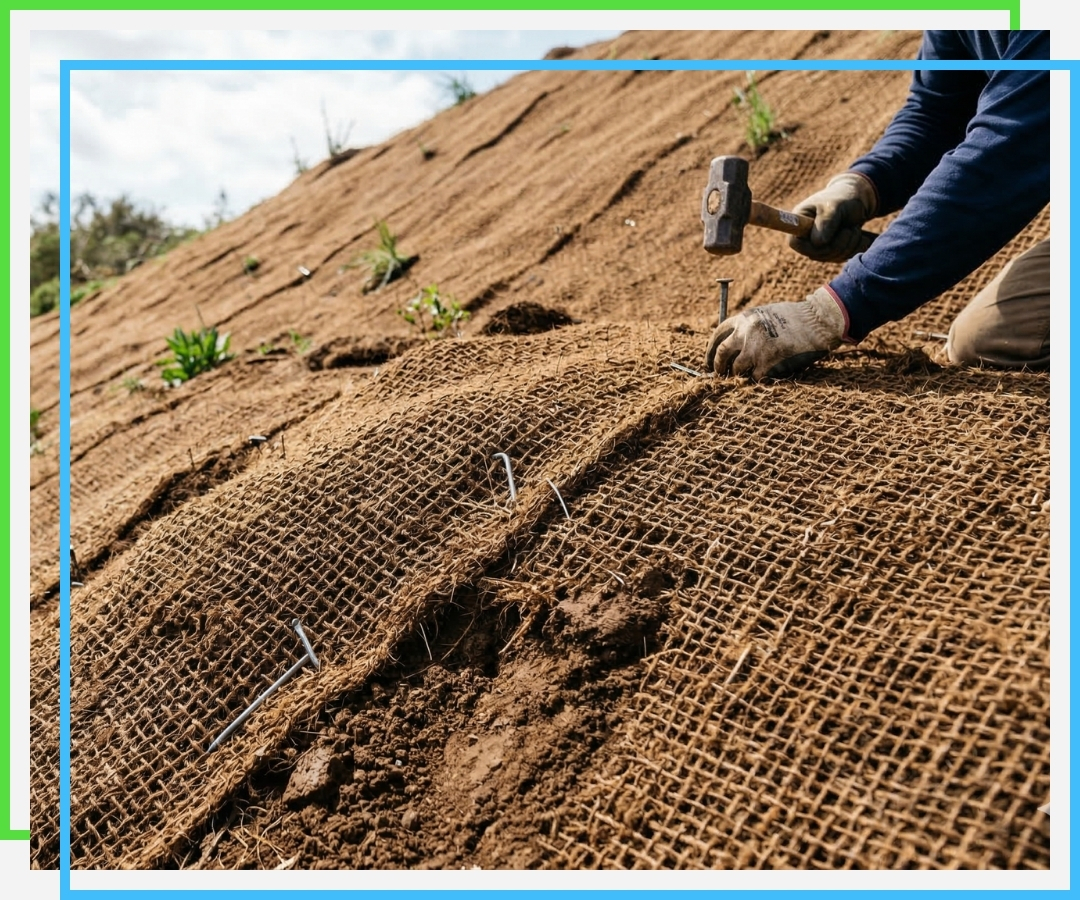
For steep slopes where soil is loose, erosion control blankets or matting are essential. These products, often made of jute, coconut fiber, or synthetic materials, provide immediate surface stability. They act as a "skin" for the earth, protecting the soil from the kinetic energy of raindrops and slowing down surface runoff. At Kern Turf Supply, we recommend selecting matting that matches the gradient of your slope and the expected duration of protection needed until vegetation takes hold.
Selecting Deep-Rooted Plants
for Soil Anchorage
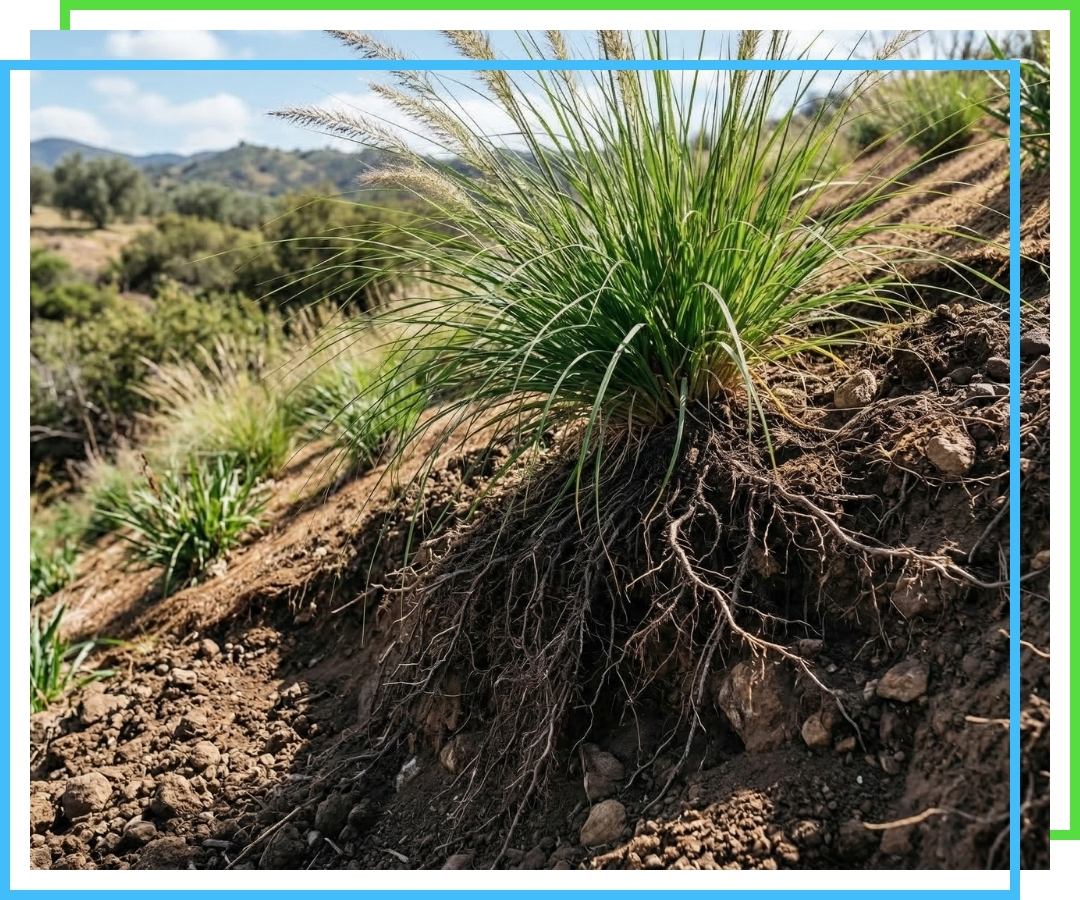
Plants are the long-term "rebar" of your soil. When selecting greenery for a slope, prioritize species known for deep, fibrous root systems that "knit" the soil layers together. In the Bakersfield climate, drought-tolerant shrubs, ornamental grasses, and groundcovers are ideal. These selections not only survive the heat but create a dense underground network that holds the earth in place far more effectively than turfgrass alone.
Implementing Terracing
and Diversion Tactics
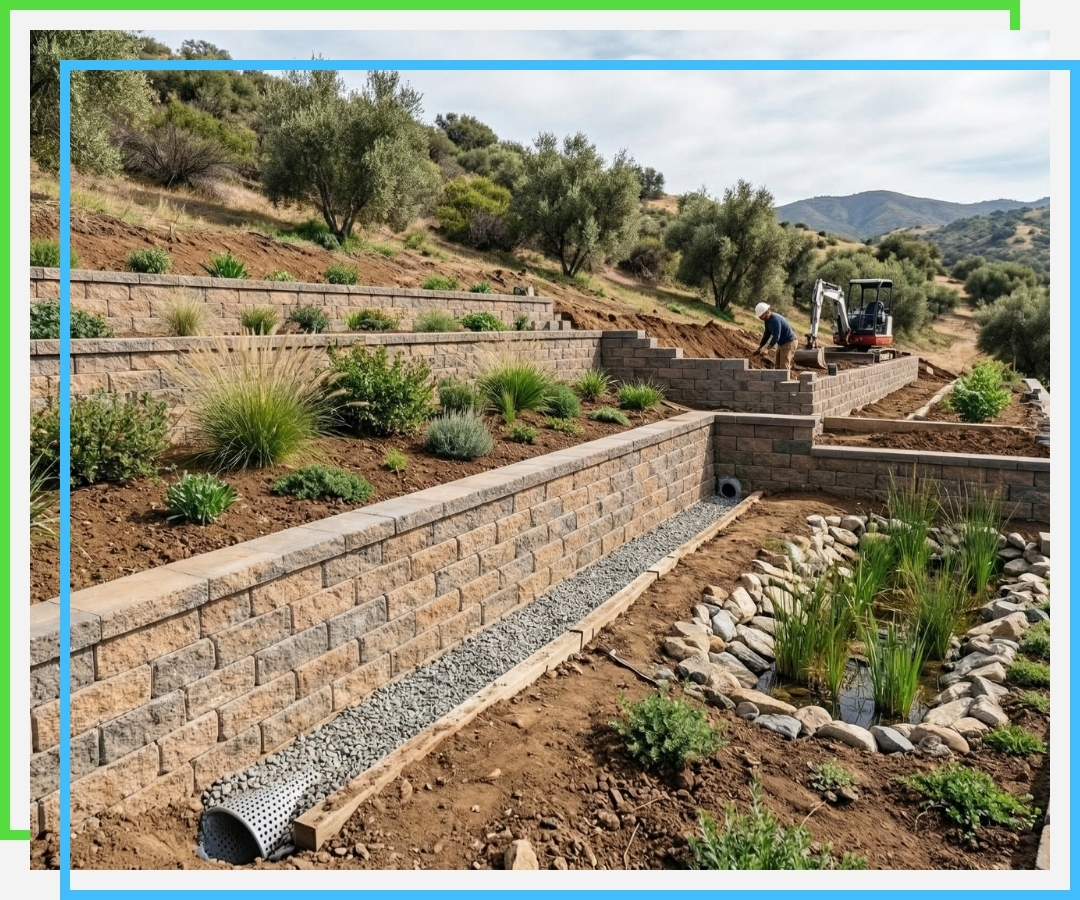
If a slope is particularly aggressive, matting and plants may need the support of structural terracing. Creating "benches" or small retaining walls breaks the flow of water, forcing it to soak into the ground rather than gain velocity downhill. Combining these structures with French drains or bioswales ensures that excess water is diverted safely away from building foundations and toward designated drainage areas.
The Role of Mulch and Hydroseeding
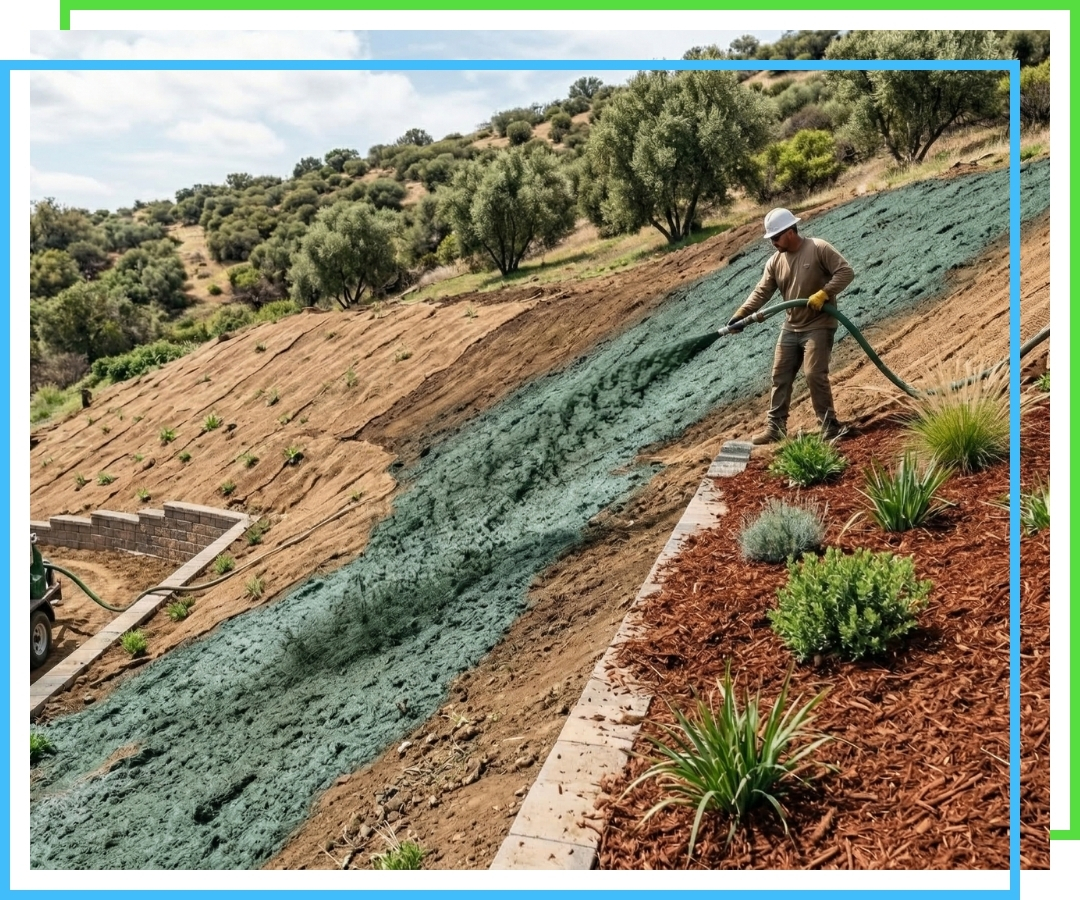
Bare soil is the primary enemy of a sloped yard. For moderate inclines, hydroseeding—a slurry of seed, mulch, and tackifiers—can provide rapid coverage. The tackifiers act as a glue, keeping the seed in place during irrigation or light rain. If using traditional mulch, opt for "gorilla hair" or shredded redwood mulch, as these textures interlock and are less likely to wash away compared to smooth wood chips.
Optimizing Irrigation for Slopes
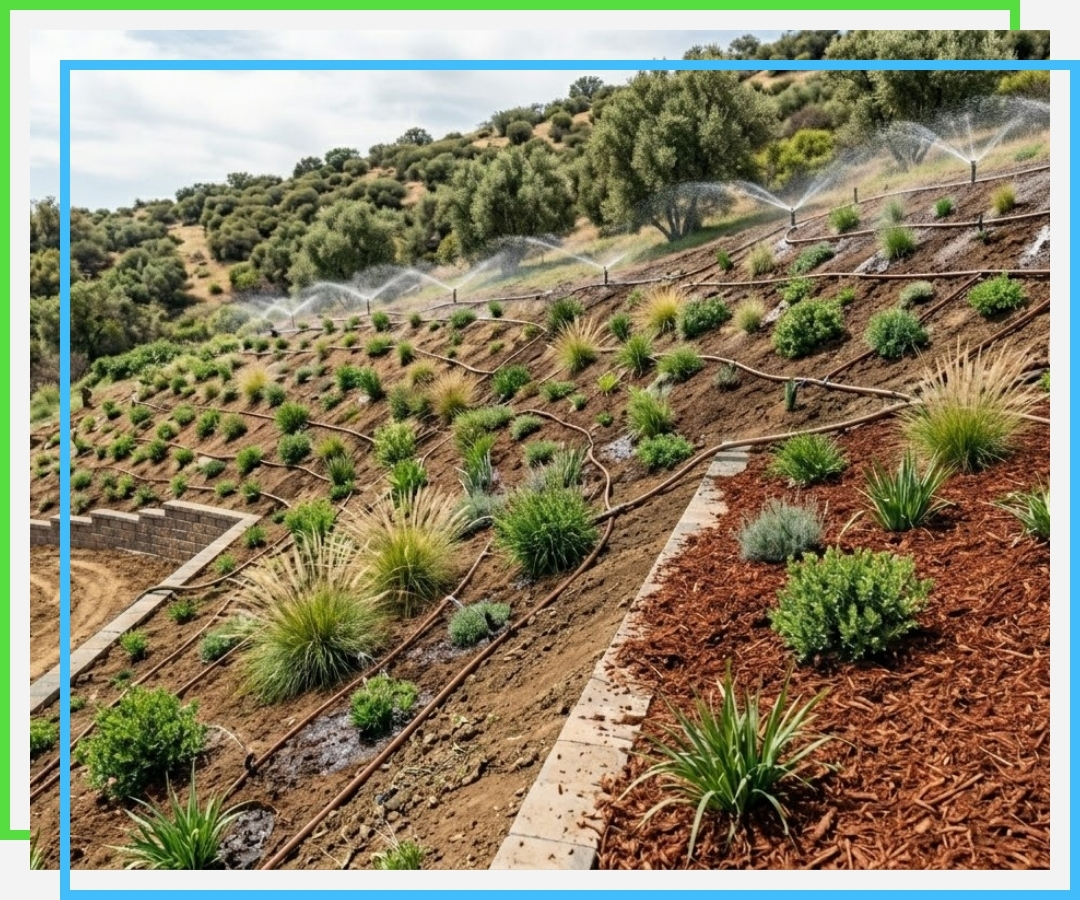
Standard irrigation often leads to runoff on slopes because water is applied faster than the soil can absorb it. For effective erosion control, utilize low-precipitation drip emitters or rotating nozzles. These systems deliver water slowly, ensuring deep penetration to the root zone without over-saturating the surface. This precision prevents the "mudslide" effect often caused by traditional high-flow sprinklers.
Secure Your Landscape with Kern Turf Supply
Protecting your property from erosion requires the right expertise and the highest quality materials. Whether you need specialized matting, drought-hardy seeds, or advanced irrigation supplies in Bakersfield, Kern Turf Supply is your partner in landscape preservation. Our team is ready to help you select the professional-grade erosion control Bakersfield experts trust. Visit us today at our Bakersfield or Lancaster locations, or explore our solutions online to start your stabilization project.