The Basics of Erosion Control
At Kern Turf Supply in Bakersfield, we’re dedicated to providing you with the best in landscape supply products of all kinds. We love nothing more than to see you combine our products with some good old hard work for a beautiful and enjoyable outdoor space that lasts a long time.
This is why we’re not a fan of anything that destroys your yard, like pests, poor soil, or even worse—erosion. Blame mother nature all you want, but erosion is a natural, inevitable process. It takes hard work, the right products, and the right strategy to stop it. Before you watch your yard crumble away from erosion, here’s everything you need to know about erosion, and how to prevent it from harming your precious outdoor space.
What is erosion, and how does it work?
Erosion happens when sedimentary rock particles, topsoil, and plant matter are weathered, dislodged, transported, and deposited in a new location via wind, moving water, or moving ice (glacial erosion).
Water, by far, is the most common agent of erosion on private properties. As small streams, nearby rivers, and runoff from heavy rain latch onto soil particles in your yard, they dislodge them and use gravitational force to carry them down inclines and hillsides until they meet up with larger water sources or find flat spots to deposit themselves. This is known as the erosion cycle. While one erosion cycle is most likely unnoticeable, years and years of erosion can cause hillside sloughing, unstable ground, and depending how close your home is to the erosion, structural damage to your home’s foundation.
At its most tame, erosion causes mild, unsightly sloughing that eats away at the stability and vegetation of a hillside. At its worst, years of erosion can create large chasms and send hillside homes (and the large masses of earth that support them) spilling down the sloughing hills below. Either way, you need to know where erosion might happen, and how to slow down or stop the process.
 Ways to Curb Erosion
Plant emergency erosion control plants.
If your erosion situation is escalating quickly, planting erosion control plants is your best option for ground stability. Most erosion control plants grow extremely fast, and have strong, widespread root systems that can hold soil firmly in its place and stifle erosion from heavy rainfall. It’s highly advised to plant two or three different types of erosion control plants at the same time, just in case one or two of the plants don’t take well to your yard’s soil. Also, keep in mind that this is a temporary remedy, and only the first step toward erosion control in your yard.
Add a layer of mulch to the area.
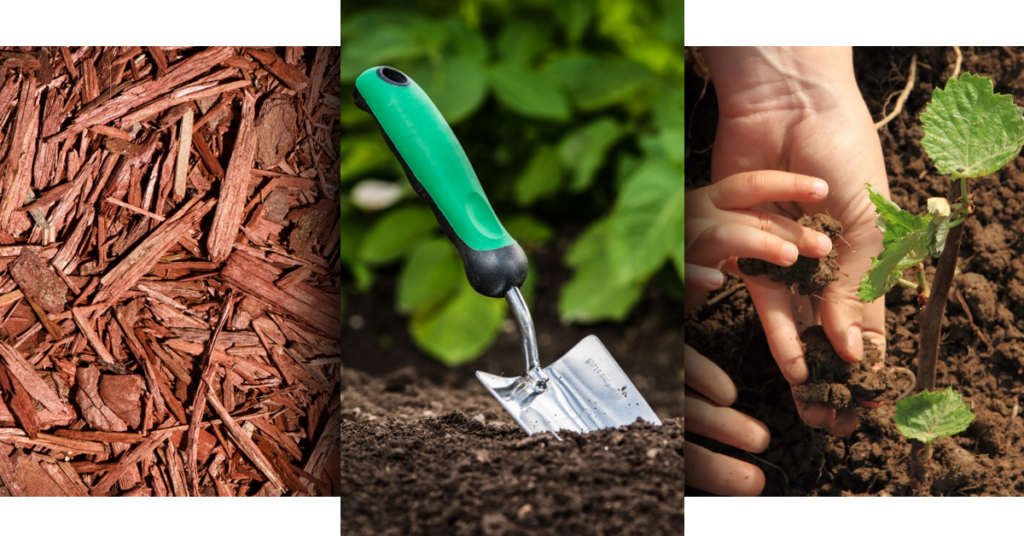
Mulch is a great cover for your soil that helps it stay in place and retain moisture, and will create a lush, thriving soil environment for plants to grow. Mulch can be made from almost any natural plant by-product, like grass clippings from your lawn mower, hay, raked leaves, tree bark, wood chips, food compost, and even newspaper or cardboard, and should be laid in a thick layer above the soil. If your mulch is having trouble staying put on a steep gradient, placing a layer of brush mats or grid wire can weigh down your mulch, holding it in place and further promoting the retention of moisture in your soil.
Plant trees and permanent plants.
After you’re sure that the area is stable, adding larger, more permanent plants will make your hard work more permanent. Trees with large root systems are a great option for erosion prone areas, as are a number of bushes and ground cover plants. Here a few great options for erosion control plants and trees that are popular and easy to grow in California:
- Canyon Live Oak
- California Buckeye
- California Lilac
- Elderberry
- Wooly Bluecurls
- Red-Flowering Currant
- Dwarf Coyote Bush
- California Sagebrush
- Manzanita
- Salvia
- California Fuschia
- Red Twig Dogwood
Control The Water—Don’t Let it Control You
One of the most effective ways to stymie erosion is to attempt to direct the flow of runoff away from your property in a way that doesn’t cause damage to your yard. The most effective way to achieve this is by creating a small trench or dip that guides water downward and off of your slope. This trench should be perpendicular to the direction of the travelling runoff, as the goal is to catch as much runoff as possible.
To determine the direction of runoff in your yard, put on your rain gear and head into your yard during heavy rainfall. You’ll be able to watch how the runoff travels across your yard, and determine the easiest and best location for you trench.
For Steeper Slopes
If you have treacherously steep slopes that are falling victim to erosion, barriers must be constructed to solidify the slope and slow down the erosion process. Many barriers are built with wood poles and heavy-duty plastic walls, or with a layers of heavy rocks and pebbles. Ultimately, this work is best left to the professionals who understand the height and weight requirements needed for your barriers, as well as the optimal location and installation tactics needed for the job.
Turn to the Experts at Kern Turf Supply
If you’re facing erosion problems large or small, you need experts that have the products and the advice you need to keep your yard safe, strong, and stunning. That’s where Kern Turf Supply can help. Our professional staff members can help you find the right erosion control products for your project, and give you quality advice on the most effective ways to handle your erosion problems. Stop by one of our Bakersfield stores today, and halt the erosion in your yard today!